
The Impact of Urban Transformation on Everyday Life
A close analysis of Jane Jacobs’ four conditions for diversity and their translation into urban form
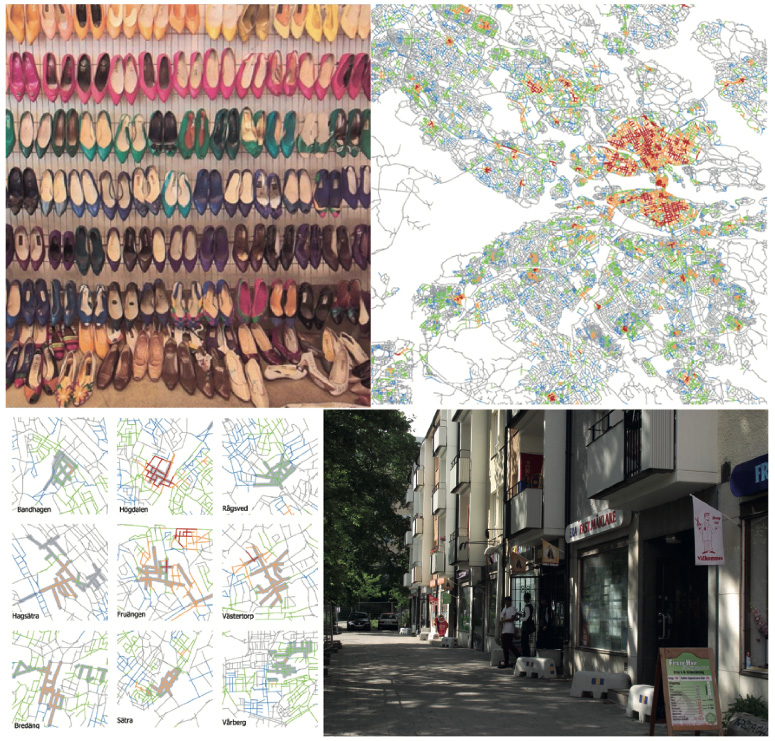
Friday the 7th of November at the Research Seminars in Architecture candidate Sara Sardari Sayyar will be presenting her research in her Final Seminar. The opponent for the Seminar will be Prof. John Peponis, Gerogia Tech.
Time: Fri 2025-11-07 15.15 - 16.30
Location: A608
Video link: https://kth-se.zoom.us/j/67185547897
The impact of urban form on urban diversity: a close analysis of Jane Jacobs’ four conditions for diversity and their translation into urban form.
Cities and regions are often regarded as complex systems, where various interrelated factors influence their urban vitality, economic growth, and overall attractiveness. Among these factors, diversity is frequently highlighted as a key element. Over recent decades, the importance of diversity in the urban environment has grown with for instance authors like Richard Florida (Florida, 2002; Florida, 2008) and Edward Glaeser et al. (1992) who suggested it as a decisive prerequisite for urban and regional economic growth.
Despite its popularity, diversity remains a complex and ambiguous concept. Researchers such as Susan Fainstein (2005) and Emily Talen (2006) question whether diversity is achievable or even desirable, stressing the need for political awareness and design strategies to support it. In Sweden, diversity is often treated as a general value in planning documents, yet it lacks clear definitions or evaluation methods. National and local policies, such as Stockholm’s Comprehensive Plan, promote diversity in housing, workplaces, services, and green spaces to support sustainability and reduce segregation.
However, planning for mixed-use areas alone does not guarantee vibrant and diverse urban environments. The thesis argues for a shift in focus— from simply planning mixed-use areas to actively designing for urban diversity. Achieving this requires a deeper understanding of how the built environment influences urban diversity. This is done by first measuring existing retail diversity as a proxy for urban diversity and then examining the role of urban form on that diversity. The study attempts to operationalize Jacobs´ four conditions for diversity using theories and methods from the field of space syntax research.
The opponent for the Seminar will be Prof. John Peponis, Gerogia Tech
For a copy of the manuscript, please contact Sara Sardari Sayyar directly sarass@kth.se
Bios
Sara Sardari Sayyar is a PhD candidate at the School of Architecture, KTH. She had her master’s in architecture from Iran before continuing her education in urban design at KTH nearly two decades ago. She has worked as a planning architect at different municipalities in Sweden during the recent years. Her research explores how analytical approaches can foster deeper and more nuanced understanding of diversity as a concept. Specifically, she investigates existing retail diversity in Stockholm and the role of urban form by translating Jane Jacobs’ four conditions through the application of Space Syntax theories and methods. The research presented in this study is planned to be delivered in the form of a licentiate thesis.
Prof. John Peponis. Born in Athens, Greece, in 1955, professor Peponis joined the faculty at Georgia Tech in 1989. He is an international leader in the field of spatial analysis and one of the original creators of space syntax. He develops analytical concepts and methods for the description of built space and the measurement of its human affordances and functions. His publications address the geometric and computational foundations of space syntax; the spatial culture of buildings and cities; design formulation and design languages; spatial cognition; work environments; museums. As a registered architect in Greece, he collaborates with Kokkinou and Kourkoulas Architects as consultant since 1992.